
An inherited IRA—also called a beneficiary IRA—is an IRA that passes to a named beneficiary after the original account holder’s death.
A beneficiary may be an individual or certain types of entities, as permitted by the Internal Revenue Service (IRS). While beneficiaries cannot make new annual contributions to an inherited IRA, the assets in the account continue to receive tax-deferred (or potentially tax-free, in the case of a Roth IRA) treatment.
SECURE Act 2.0 updates to beneficiary titles
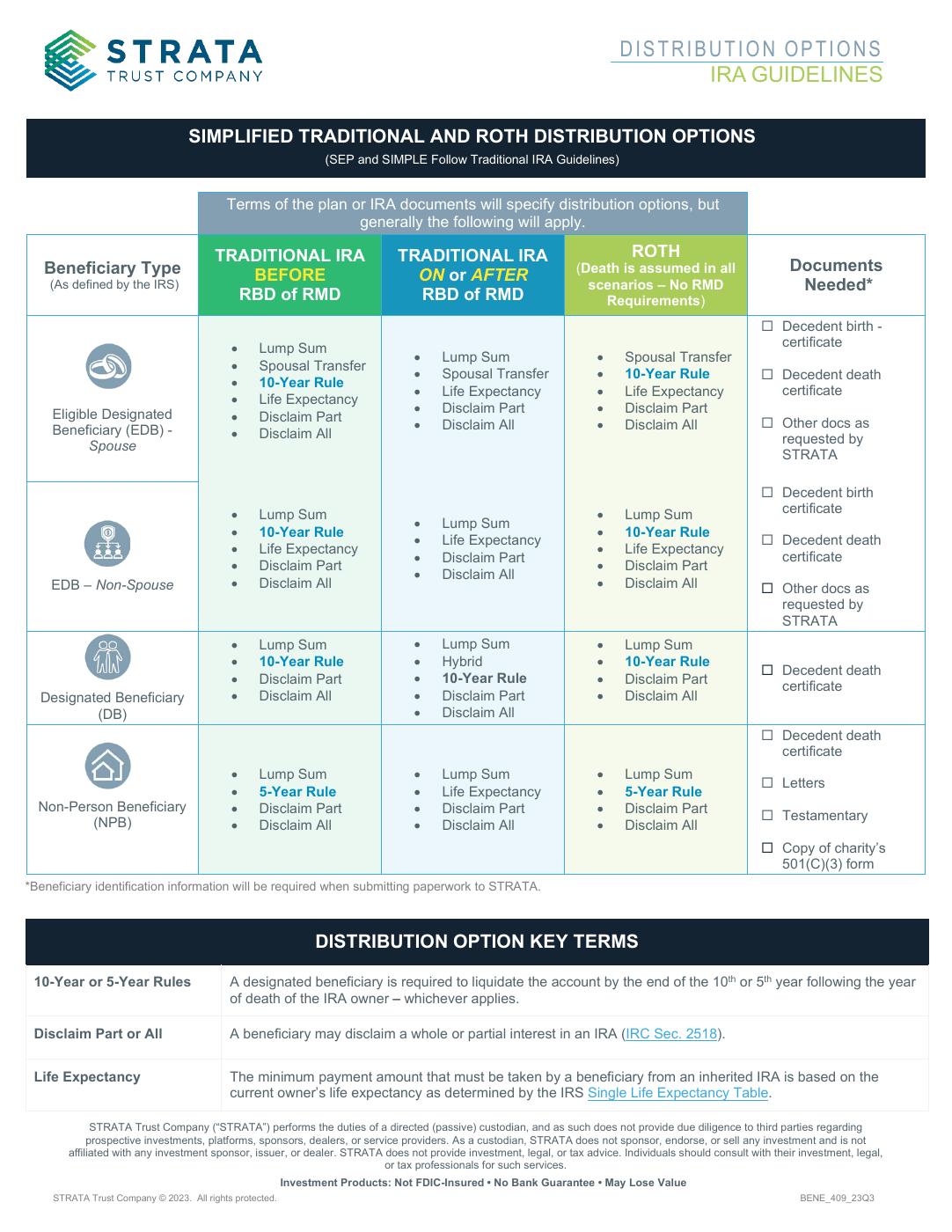
Distribution rules depend on the beneficiary’s classification under the SECURE Act 2.0 and IRS regulations. Beneficiaries generally fall into one of three categories:
-
Eligible Designated Beneficiary (EDB) – Includes surviving spouses, minor children of the account owner, certain disabled or chronically ill individuals, and individuals not more than 10 years younger than the original owner.
-
Designated Beneficiary (DB) – Typically adult children, family members, or other individuals.
-
Non-Person Beneficiary (NPB) – Estates, certain trusts, or qualified charities.
Each category has specific distribution timelines and requirements.
➡️Update designations
To help ensure your IRA transfers according to your wishes, keep your beneficiary designations current. Accountholders may update their designations using STRATA’s Beneficiary Designation/Change form.
Quick reference
For additional information, refer to IRS.gov and/or download STRATA's Distribution Options: IRA Guidelines to overview beneficiary distribution options and key terms.
Questions
For questions regarding tax implications or advice on what makes sense for your circumstances, connect with your tax, legal, or financial professional. For information regarding a STRATA IRA account or to make a beneficiary claim, reach out to STRATA's Beneficiary Concierge team at 866-891-8264.